
In short: rotator cuff problems are the most common cause of shoulder pain. They usually come on when the shoulder is asked to do more than it is ready for, and most people recover with the right kind of exercise, patience and sensible pacing. Recovery is often measured in weeks to months rather than days, so it helps to know what to expect, what to do yourself and when to get your shoulder looked at.
What is the rotator cuff?
The rotator cuff is a group of four muscles around the shoulder blade whose tendons join onto the top of the arm bone. Together they keep the ball of the shoulder centred in its socket and help you lift, rotate and reach.
An NHS physiotherapy service reports that the rotator cuff accounts for up to 70% of all shoulder pain. You may have heard it called impingement, bursitis, subacromial pain or rotator cuff tendinopathy. Clinicians increasingly use one umbrella term, rotator cuff-related shoulder pain, because those labels describe the same problem rather than different diseases.
Why does it happen?
The most useful way to think about it is load and capacity. Every time you use your arm, you put load on the rotator cuff. Its ability to cope with that load is its capacity. When the load goes beyond what the tendon is ready for, it becomes painful.
That can happen quickly, such as a weekend of hedge-cutting after a winter off, a new gym programme or decorating a ceiling. It can also creep up slowly, through small changes in work or daily life that add up. Sometimes it follows a fall. Stress, poor sleep and general health can also turn the volume of pain up or down, which is one reason two people with similar shoulders can feel very different.
Common symptoms
- An ache on the outside of the shoulder and upper arm, sometimes spreading towards the neck
- Pain lifting your arm out to the side or overhead, often worst partway up
- Pain reaching behind your back, into a high cupboard or for a seatbelt
- Discomfort lying on that side at night
- Pain that gets worse with use and eases with rest
The NHS notes that pain that worsens with use points towards tendon, bursa or impingement problems. In contrast, pain and stiffness that steadily lasts months is more typical of frozen shoulder or arthritis. If you are not sure which you have, our guide to frozen shoulder stages describes how that condition behaves, and it is worth having it properly assessed.
Do you need a scan?
Usually not. NHS physiotherapy guidance explains that ultrasound, X-ray and MRI are not required in most cases, because the changes they show (a thickened tendon, a thickened bursa, age-related wear) are very common in people with no shoulder pain at all. A scan report can sound alarming without explaining why your shoulder hurts. A careful examination tells you more at the start, and imaging is kept for when the result would change the plan. Our article on X-ray vs MRI explains the difference.
What you can do yourself
- Keep moving, but pace it. Resting the shoulder completely tends to make the rotator cuff weaker. Aim for the middle ground: break big jobs into smaller chunks, and step closer to things instead of reaching out for them.
- Start gentle strengthening. Exercise is the mainstay of recovery. NHS programmes typically begin with simple movements such as sliding your hands up a wall, wall push-ups and rotating the forearm upwards with the elbow supported, then build up gradually with a light weight such as a water bottle.
- Use the "settles quickly" rule. Some discomfort during exercise is normal and expected. It should be tolerable and settle soon afterwards. If increased pain lasts more than a few hours, ease off the difficulty a little rather than stopping altogether.
- Be consistent. NHS physiotherapy advice suggests doing the exercises most days. Changes in a tendon take weeks, not days.
- Help your sleep. Rest your arm on a pillow, or roll a pillow behind your back so you do not roll onto the sore side. There are more ideas in our guide to side sleeping and shoulder pain.
- Ease the pain. Heat or a cold pack (wrapped in a towel) for up to 20 minutes can help, and a pharmacist can advise on painkillers, tablets or gels.
How long does it take?
This is the question everyone asks, and the honest answer is: longer than most people hope, but the outlook is good. NHS physiotherapy guidance says it can take at least 12 weeks for symptoms to improve, with further improvement up to 24 weeks, and that you may not notice much change in the first six weeks. Most people do recover.
A large UK trial of more than 700 people (the GRASP trial) found that a single session of physiotherapy advice with a good home exercise programme worked as well, at 12 months, as a longer course of supervised sessions. A steroid injection reduced pain for around eight weeks but made no difference at a year. Put simply, the exercise does most of the work, and getting the programme right and sticking with it matters more than how many appointments you have.
When to get help quickly
The NHS advises asking for an urgent GP appointment or contacting NHS 111 if you have:
- sudden or very severe shoulder pain
- pain after an injury or fall, or you cannot move your arm
- a change in the shape of the shoulder, or marked swelling
- pins and needles that will not go away, or loss of feeling in the arm or shoulder
- a shoulder or arm that feels hot or cold
- severe pain in both shoulders
- a high temperature or feeling generally unwell
If you have chest pain that spreads to your arm, neck or jaw, call 999. It could be a heart attack. See your GP if the pain is getting worse or has not improved after two weeks of self-care.
How we can help at Elaris
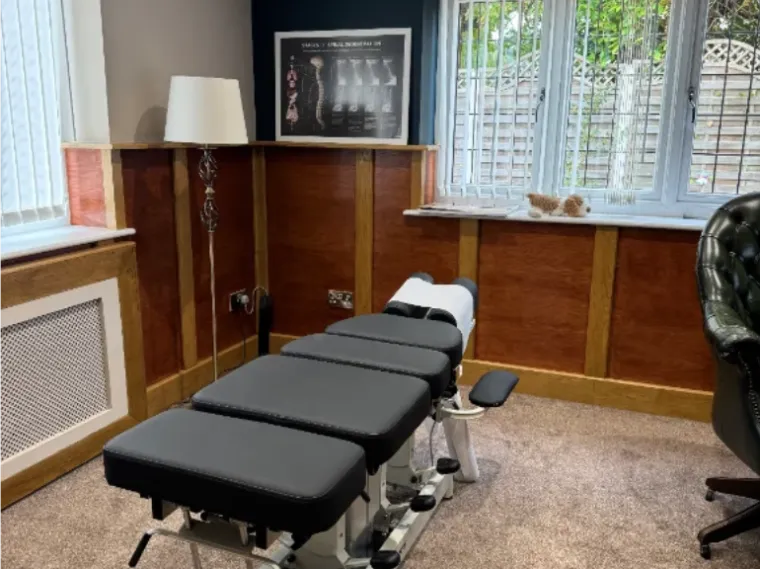
We assess and treat rotator cuff problems and other shoulder pain at our clinic in Great Totham, for patients from Maldon, Tiptree and the surrounding villages. A new patient consultation is £105 and takes about 30 minutes. It starts with a full history and a hands-on examination of the shoulder. Because neck problems can cause pain that is felt around the shoulder, we also check your neck and upper back.
We then explain what we have found in plain language and set out a written plan. Care usually combines hands-on treatment to help the shoulder and upper back move more comfortably with a graded exercise programme you do at home, plus practical advice on pacing work, sport and sleep. We are honest about the evidence: research suggests exercise is the key ingredient, and hands-on treatment on its own has not been shown to add much, so we use it to support your exercise programme rather than replace it. Follow-up sessions are £62.50 and take about 15 minutes. We review your progress at each stage.
If your symptoms suggest a tear, a frozen shoulder or anything that needs investigation, or you are not improving as expected, we will tell you and refer you to your GP. Read more about our neck and shoulder pain care, or about pain around the shoulder blade.
Frequently asked questions
How long does rotator cuff pain take to get better?
NHS physiotherapy guidance says it often takes at least 12 weeks for symptoms to improve, with further improvement up to 24 weeks. You may not see much change in the first six weeks, so patience and consistent exercise matter.
Do I need a scan for rotator cuff pain?
Usually not. Scans often show changes that are also common in people without shoulder pain. A careful examination is the starting point, and imaging is used when the result would change the plan.
Should rotator cuff exercises hurt?
Some discomfort is normal, as long as it is tolerable and settles soon afterwards. If increased pain lasts more than a few hours, reduce the difficulty of the exercise rather than stopping altogether.
Is a steroid injection worth having?
In the UK GRASP trial, an injection reduced pain for around eight weeks but made no difference at 12 months. It is sometimes used when pain makes exercise impossible, and it is worth discussing with your GP.
Can a chiropractor help with rotator cuff problems?
Chiropractors assess and treat rotator cuff problems and other shoulder complaints. At Elaris we combine hands-on care with a graded exercise plan, and we refer you on if your symptoms need investigation.
Sources
- Shoulder pain, NHS
- Heart attack, NHS
- Rotator cuff-related shoulder pain: patient information leaflet, Leicestershire Partnership NHS Trust MSK Physiotherapy (April 2026)
- One-off physiotherapy session effective for shoulder pain (GRASP trial), NIHR Evidence
- Manual therapy and exercise for rotator cuff disease, Page MJ et al., Cochrane Database of Systematic Reviews, 2016