
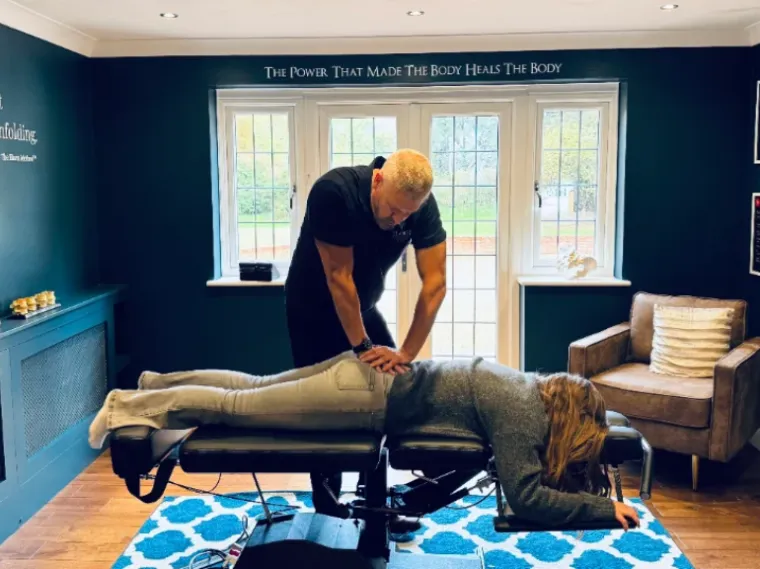
One moment you are lifting the shopping or getting out of the car, and the next you can barely stand up straight. Sudden lower back pain is frightening, but South Tees NHS reminds us that low back pain can be scary but it’s rarely dangerous. This guide covers the first three days: what to do, what to avoid, and the warning signs that mean you need help today.
TL;DR
- Most sudden lower back pain comes from a strained muscle or ligament. It is painful, but generally nothing in the back is permanently damaged.
- Keep moving gently and carry on with normal activities as far as you can. Long periods in bed tend to slow recovery.
- Ice can help with pain and swelling, and heat can help with stiffness and spasm. Ask a pharmacist which painkiller suits you.
- Numbness around the genitals or anus, bladder or bowel changes, or symptoms in both legs need 999 or A&E straight away.
Table of Contents
- What has happened to my back?
- First: check the warning signs
- The first 24 hours
- Days two and three
- What not to do
- When to get help
- How we can help
- FAQ
- Sources
What has happened to my back?
People often say they have “put their back out”, but despite the phrase, nothing has usually slipped out of place. Milton Keynes University Hospital explains that simple mechanical back pain accounts for about 19 in 20 cases of sudden-onset back pain. Most cases are thought to come from a sprain or small tear in a ligament or muscle, usually nothing abnormal shows up on X-rays, and generally nothing in the back is permanently damaged.
The pain can still be severe. It is typically felt in one area of the lower back, and it can spread into the buttocks and thighs. South Tees NHS notes that people with back pain often tense the muscles around the spine as a protective response, rather like clenching your fist after spraining your wrist. That is one reason bending, rolling over in bed or getting up from a chair can feel so hard at first.
The NHS says back pain usually improves within a few weeks, though it can sometimes last longer or keep coming back. Milton Keynes University Hospital adds that most acute simple back pain eases within a week or so, and that in 9 out of 10 cases symptoms have gone or greatly eased within six weeks. For the wider picture, see our article on lower back pain causes.
First: check the warning signs
Serious causes of back pain are uncommon. St George’s Hospital says less than one per cent of people present with a serious cause. But before you start managing it at home, take a moment to check for these signs.
Call 999 or go to A&E if you have back pain with any of these (NHS):
- pain, tingling, weakness or numbness in both legs
- loss of feeling around your genitals or anus
- bladder or bowel changes, such as difficulty peeing or losing control of your bladder or bowels
- changes in genital sensation, erection problems or being unable to orgasm
- chest pain
- pain that started after a serious accident, such as a car crash
Do not drive yourself to A&E.
Ask for an urgent GP appointment or call 111 if you have back pain and feel hot, cold, shivery or generally unwell, or if the pain is severe, started suddenly or is getting worse quickly.
The first group of symptoms can be a sign of cauda equina syndrome, which can happen when the bundle of nerves at the bottom of the spinal canal is compressed. Oxford University Hospitals describes it as very rare, affecting 1 to 3 in 100,000 people, but it needs immediate emergency assessment and treatment, so do not wait for a routine appointment and do not book a chiropractor first.
“Anyone with back pain that has saddle anaesthesia and/or bowel and bladder changes, we refer immediately to A&E, because that’s a symptom of cauda equina.”
— Dr Stephen Davison (Doctor of Chiropractic)
(“Saddle anaesthesia” means loss of feeling in the area that would touch a saddle: around the bottom, back passage, genitals and inner thighs.)
The first 24 hours
If none of the warning signs apply, the aim of the first day is simple: calm the pain enough to keep moving.
Keep moving gently
This is the single most useful thing you can do, and it feels wrong when you are sore. The NHS advises that you stay active and try to continue with your daily activities. NICE, which sets clinical guidance for the NHS, recommends that people with low back pain are given encouragement to continue with normal activities.
In practice, that means short walks around the house or garden, changing position often, and not sitting still for long stretches. Milton Keynes University Hospital puts it well: continue with normal activities as much as possible, but as a rule don’t do anything which causes a lot of pain.
Ice or heat
The NHS suggests both, for different jobs:
- Ice for pain and swelling: an ice pack or a bag of frozen peas wrapped in a tea towel.
- Heat for stiffness or muscle spasm: a heat pack or hot water bottle wrapped in a tea towel.
Never put ice or a heat source directly on the skin. In the clinic, ice and sometimes heat is advice we find ourselves giving every week. Try both and use whichever helps you more.
Pain relief
The NHS says anti-inflammatory painkillers such as ibuprofen may help, but they are not suitable for everyone. It also says paracetamol on its own is not recommended for back pain, although it may be combined with another painkiller. NICE guidance takes the same view. Speak to a pharmacist or your GP about what is safe for you, especially if you have other health conditions or take other medicines. Milton Keynes University Hospital notes that taking painkillers regularly, rather than waiting for the pain to peak, may help you stay active.
Sleep
The first night is often the worst. Milton Keynes University Hospital suggests you sleep in the most naturally comfortable position. If the pain is so bad that staying in bed seems the only option, it advises keeping bed rest as short as possible.
Days two and three
It is normal to still be stiff and sore after a couple of days. Milton Keynes University Hospital says most acute simple back pain eases within a week or so, so days two and three are about building up gently rather than expecting it to be gone.
- Walk a little more each day, within what you can manage. The NHS lists walking among the activities that may help.
- Try some gentle movement. The NHS suggests back exercises and stretches, and says to stop if they make the pain worse. Simple options from the St George’s Hospital leaflet include lying on your back with your knees bent and gently rolling them from side to side.
- Stay at work if you can. St George’s Hospital says that staying at work or returning quickly has been shown to positively influence recovery. NICE also recommends supporting a return to work and normal daily activities. If your job is physical, talk to your employer about lighter duties for a few days.
Some pain as you start to move is normal. South Tees NHS explains that pain with exercise and movement doesn’t mean you are doing harm: it reflects how sensitive the area is, not how damaged it is. St George’s Hospital sums this up as “hurt does not equal harm”.
What not to do
- Don’t take to your bed. The NHS says not to stay in bed for long periods. A Cochrane review found that, for acute low back pain, advice to stay active may bring small benefits in pain and function compared with advice to rest in bed.
- Don’t rely on a back belt or brace. NICE recommends that belts or corsets are not offered for managing low back pain.
- Don’t rush for a scan. NICE advises against routinely offering imaging for low back pain outside specialist settings. Scans often show changes that are common in people without any pain. Our guide to X-ray versus MRI explains when imaging is genuinely useful.
- Don’t jump straight back into heavy work. South Tees NHS says activities like bending and lifting are safe if you start gradually and practise regularly, so build back up in steps.
When to get help
Go straight to the warning signs above if anything changes. Otherwise, the NHS advises seeing a GP if your back pain:
- does not improve after a few weeks of treating it at home
- stops you doing your daily activities
- is very worrying or you are struggling to cope
- comes with unexplained weight loss
- comes with a lump or swelling, or a change in the shape of your back
- does not improve with rest or is worse at night
- is worse when you sneeze, cough or poo
- is felt between your shoulder blades rather than in your lower back
Pain that travels down the leg to the calf or foot, sometimes with pins and needles, numbness or weakness, may mean a nerve is irritated. Our sciatica page explains more.
You don’t have to wait weeks before getting advice. If the pain is stopping you working or sleeping, if this is not your first episode, or you simply want to know what is going on and what to do next, an assessment can give you a clear plan.
How we can help
At Elaris in Great Totham, we see people with sudden, recent and long-standing back pain. If your pain followed a fall, a car accident or another injury, please see your GP or A&E first.
Your first appointment is a consultation and examination of about 30 minutes. You tell us how the pain started, what it feels like and what it is stopping you doing, and we carry out a hands-on and neurological examination, checking for the warning signs above. Our two chiropractors, Dr Stephen Davison and Dr Jo Davison, then discuss your case, and you come back for a report-of-findings visit, where we explain what we found in plain English and agree a plan with you. The new patient fee of £105 covers both visits.
If chiropractic care is suitable, it may include gentle, hands-on adjustment of joints that aren’t moving well, soft tissue work and a home exercise programme. NICE recommends that manual therapy such as spinal manipulation is considered for low back pain only as part of a treatment package that includes exercise, and that is how we work.
“We give people exercises to do at home, and sometimes advice about pillows, mattresses, sitting positions, ergonomics.”
— Dr Stephen Davison (Doctor of Chiropractic)
We only refer for X-rays or MRI when they are genuinely needed. If anything in your history or examination suggests something other than a mechanical back problem, or you are not progressing as expected, we will refer you to your GP and write to them. Read more about back pain care at Elaris, or what happens at your first chiropractic visit.
FAQ
Should I use ice or heat for sudden back pain?
The NHS suggests both, for different jobs. Use an ice pack or a bag of frozen peas wrapped in a tea towel for pain and swelling, and a heat pack or hot water bottle wrapped in a tea towel for stiffness or muscle spasm. Never put either directly on the skin. Use whichever helps you more.
Should I rest in bed after putting my back out?
No, not for long. The NHS advises against staying in bed for long periods, and a Cochrane review found that advice to stay active may bring small benefits in pain and function compared with advice to rest in bed. Keep moving gently within what you can manage.
How long does sudden lower back pain last?
The NHS says back pain usually improves within a few weeks. Milton Keynes University Hospital says most acute simple back pain eases within a week or so, and that in 9 out of 10 cases symptoms have gone or greatly eased within six weeks. It can come back, so keeping active afterwards matters.
Do I need a scan for sudden back pain?
Usually not. NICE advises against routinely offering imaging for low back pain outside specialist settings, and scans often show changes that are common in people without pain. A scan is considered when warning signs are present or the result is likely to change your care.
When should I see someone about sudden back pain?
Call 999 or go to A&E for numbness around the genitals or anus, bladder or bowel changes, or symptoms in both legs. Call 111 or ask for an urgent GP appointment if you feel unwell or feverish, or the pain is severe and getting worse quickly. If it is not improving after a few weeks, or is stopping you working or sleeping, book an assessment.
Sources
All sources checked on 13 November 2026.
- Back pain, NHS
- Low back pain and sciatica in over 16s: assessment and management (NG59), recommendations, NICE
- Lower back pain advice, Milton Keynes University Hospital NHS Foundation Trust
- Back Pain Advice (Emergency Department leaflet), St George’s University Hospitals NHS Foundation Trust
- 10 Back Facts, South Tees Hospitals NHS Foundation Trust
- Cauda Equina Syndrome Awareness, Oxford University Hospitals NHS Foundation Trust
- Advice to rest in bed versus advice to stay active for acute low-back pain and sciatica (Dahm KT et al., 2010), Cochrane Database of Systematic Reviews