


In most of the UK, chiropractic is not part of routine NHS care. The Royal College of Chiropractors says it is not usually available on the NHS, although a few GP practices do offer it. What the NHS does provide free is physiotherapy and community musculoskeletal (MSK) services for back, neck and joint pain. If you want hands-on chiropractic care, you will normally book privately, with no GP referral needed, and some health insurance policies may help with the cost.
This guide sets out what is on offer, how to get NHS help for back pain, neck pain and sciatica, how insurance cover works, and what to check before you book a chiropractor.
TL;DR
- Chiropractic is rarely available on the NHS. Ask your GP practice whether it is offered locally, but do not count on it.
- In England, most adults registered with a GP can self-refer to community MSK services for back, neck and joint pain, with no GP appointment in many areas.
- You do not need a GP referral to book a private chiropractor. Some insurers want you to call them first, so check your policy before you book.
- Cover varies. Bupa and AXA list chiropractic in some products, always with limits, so read the policy wording.
- Check that any chiropractor is on the General Chiropractic Council (GCC) register, and tell them about your medicines and medical conditions.
Table of Contents
- Can you see a chiropractor on the NHS?
- What NHS care is available for back, neck and sciatica pain
- How to self-refer to NHS musculoskeletal services
- Do you need a GP referral for a chiropractor?
- Does private health insurance cover chiropractic?
- What to check before you book a chiropractor
- Our perspective on NHS and private care
- Book an assessment at Elaris
- FAQ
- Sources
Can you see a chiropractor on the NHS?
Usually not. Chiropractors in the UK work mostly in private practice, and the RCC’s guidance to patients is to check with your own GP practice, because a small number of surgeries do provide it. There is no national NHS chiropractic service you can be referred into, so the answer depends on where you live and on local commissioning.
That is why the question gets mixed answers online. Someone may report having had chiropractic care in an NHS setting years ago, and that can be true of one area at one time. It does not describe what is available across the country today.
The General Chiropractic Council makes the practical consequence clear. Because NHS provision is rare, the patient or their insurer generally pays for care. It also says treatment cannot begin until you have given consent, and that fees should be agreed before care starts.
So your realistic options are:
- Use the free NHS route for musculoskeletal pain (physiotherapy and community MSK services).
- Book a registered chiropractor privately, paying yourself or claiming through insurance.
- Do both: use NHS services for assessment and exercise advice while you arrange private hands-on care.
What NHS care is available for back, neck and sciatica pain
The NHS says physiotherapy is free on the NHS, although waiting lists can be long. In many areas you can refer yourself to a community MSK service without seeing a GP first.
For sciatica, the NHS guidance (updated 2 March 2026) says treatment can include exercises, painkillers and physiotherapy, including exercise advice and manual therapy. That is the NHS’s own description of the care pathway: self-help first, then professional support if symptoms persist.
What community MSK services may offer, according to the NHS page on back and joint problems (18 November 2025):
- assessment of your problem
- physiotherapy
- pain management
- occupational therapy
- onward referral or tests where needed
These services do not offer urgent or emergency help. Waiting times depend on your area, so it is worth asking how long the wait is when you refer.
Some people also explore complementary approaches such as Reiki for physical pain while they wait for an appointment or alongside medical care. Whatever you choose, keep your GP or MSK clinician informed, so that nothing important in your symptoms is missed.
Red flags: when not to wait for an appointment
The NHS says sciatica needs urgent assessment if you have symptoms in both legs, severe or worsening weakness or numbness in both legs, numbness around the saddle area (genitals, buttocks, inner thighs), or new problems controlling your bladder or bowels. Do not book a routine appointment of any kind for these. Contact NHS 111 or go to A&E. Our guide to lumbar radiculopathy symptoms and when to seek emergency care explains the signs in more detail.
How to self-refer to NHS musculoskeletal services
The NHS says most adults who live in England and are registered with a GP can self-refer to community MSK services for back, neck and joint pain or sciatica. Availability varies by area, and some services still ask you to go through the GP surgery.
A simple way to go about it:
- Search for your local community MSK or physiotherapy self-referral service on the NHS website, or look at your GP practice’s website, which often links to it.
- If you cannot find a self-referral form, phone your surgery’s reception and ask whether they take self-referrals for MSK problems.
- Describe your symptoms clearly: where the pain is, how long you have had it, what makes it worse, and any leg pain, numbness or weakness.
- Ask about the expected wait, and whether there are exercise resources to use in the meantime.
- If your symptoms change or worsen while you wait, tell the service, or see your GP.
This route is for people living in England. The NHS in Scotland, Wales and Northern Ireland runs its own arrangements, so look at your local health board’s pages.
Do you need a GP referral for a chiropractor?
No, not for a private appointment. Bupa explains that you can book a chiropractor yourself, and that you should speak to your GP if you want to know whether any NHS chiropractic is available to you.
There are two situations where a GP is still useful:
- You want to know about local NHS provision. Your practice will know whether any service exists nearby.
- Your symptoms need medical investigation. A GP can arrange tests or onward referral. The GCC says chiropractors themselves may refer you to another professional, such as your GP, if they cannot improve your condition or have concerns about another health problem.
If you have health insurance, the rules are different. Some insurers want you to contact them before you book, even though no GP referral is needed in law. That is covered next.
Does private health insurance cover chiropractic?
Some policies do. Bupa says some private health insurers cover chiropractic, and recommends checking your policy or asking your insurer. The details differ a great deal between products, so treat the examples below as an illustration of how limits work, not as a promise of cover.
| Provider and product | What the provider says about chiropractic | Things to check |
|---|---|---|
| Bupa cash plans for employees | Therapy treatments including chiropractic may be covered up to a total of £500 per benefit year | The amount depends on membership level and policy terms |
| Bupa small-business summary (1 February 2023) | Complementary treatment including chiropractic may be covered up to £250 within the outpatient limit on one listed product; cash-plan levels list therapy limits of £150, £300 or £500 per covered member | Which product and level you hold |
| Bupa cash plan claim form | Chiropractic is listed as a claim category alongside physiotherapy, osteopathy and acupuncture | Your table of cover and membership guide set the benefit limits |
| AXA Health outpatient option | Up to 10 combined sessions of physiotherapy, osteopathy or chiropractic | Sessions are shared across the three therapies |
The Bupa summary is from 2023 and benefit levels change, so use it to know what to look for, then confirm today’s figures in your own policy documents.
Direct access and pre-authorisation
Bupa says most of its health insurance includes Direct Access for some symptoms without a GP referral, and asks members to contact Bupa first about muscle, bone and joint problems. In practice, ring your insurer before your first appointment and ask three questions: is chiropractic covered, how many sessions or how much money is available, and do they need to authorise treatment in advance.
Pre-existing conditions
Insurance generally covers new conditions. AXA says its health plan generally covers new conditions that develop after you join, and excludes conditions present in the three years before joining until you have been trouble-free for two consecutive years. If your back pain is long-standing, check how your insurer treats it before you rely on a claim.
Is your chiropractor recognised by the insurer?
Insurers set their own criteria for the practitioners they will pay. AXA asks an individual chiropractor to have at least one year of full GCC registration, a clean GCC record, current professional indemnity insurance and electronic invoicing. Bupa asks for individual GCC accreditation, a clean regulatory record, at least five years’ post-qualification full-time experience, current indemnity insurance and an enhanced DBS certificate.
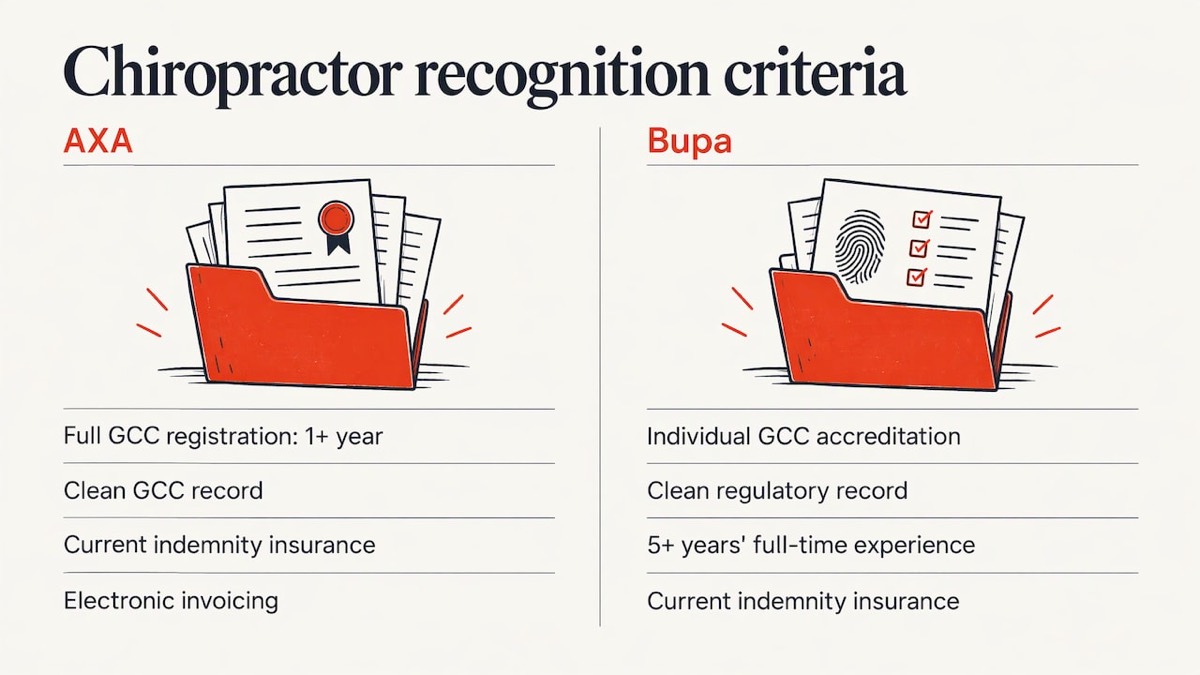
So ask the clinic whether they are recognised by your insurer. If you are paying yourself, you still do well to look for a chiropractor with the same kind of record.
What to check before you book a chiropractor
Registration
The NHS says UK law requires anyone practising as a chiropractor to be registered with the General Chiropractic Council, and advises checking the GCC register before private treatment. Bupa notes that chiropractors complete at least four years of training before they qualify and register. The register is free to search online, so check the name of the person who will treat you.
Your first appointment
The GCC says an initial consultation typically lasts between 30 minutes and an hour and includes a case history and physical examination. Before treatment starts, the chiropractor should explain the proposed care, its benefits, risks and side effects, and you must consent. Our guide to what happens at your first chiropractic visit shows how to prepare.
Safety and your medical history
The NHS says chiropractic or osteopathy may not be safe if you take blood-thinning medicines, are at increased risk of bleeding or stroke, or have very weak or seriously damaged bones or joints. Tell your therapist about all medical conditions and medicines before treatment. This is the reason a thorough history matters at the first visit.
What the guidelines say about manual therapy
According to the Royal College of Chiropractors, the NICE guideline NG59 recommends exercise for low back pain with or without sciatica. It says manual therapy (spinal manipulation, mobilisation or soft-tissue techniques) can be part of a package of care that may also include psychological therapy. The RCC also says the evidence for chiropractic in musculoskeletal conditions is shared with that for physiotherapy and osteopathy. In other words, the best-supported approach combines hands-on treatment with active rehabilitation, not one technique alone.
Planning the cost and the number of visits
Ask for the fee for the first appointment and for follow-ups before you commit, and ask how many sessions the chiropractor expects you to need. Our article on how many chiropractic sessions you may need gives an idea of what to expect.
Our perspective on NHS and private care
People often come to us after weeks on a waiting list, or after being told to rest and take painkillers. We think the NHS does important work for musculoskeletal pain, and we would always encourage anyone with red-flag symptoms to seek urgent medical help first.
For everyone else, what we have seen over more than 25 years is that people want time and an explanation. Our Elaris Method™ looks at structural, neurological and emotional factors together, because pain rarely has a single cause. We carry out a hands-on examination and neurological testing, then give you a written treatment plan so that you know what we are doing and why.
You see the same two practitioners at every visit, and we measure your progress at each stage. We have helped more than 1,000 local patients in this way, and we aim to understand what is driving your pain, not just where it hurts. Our approach is designed to support lasting improvement, and we work alongside your GP whenever it helps you.
— Dr Stephen Davison (Doctor of Chiropractic)
Book an assessment at Elaris
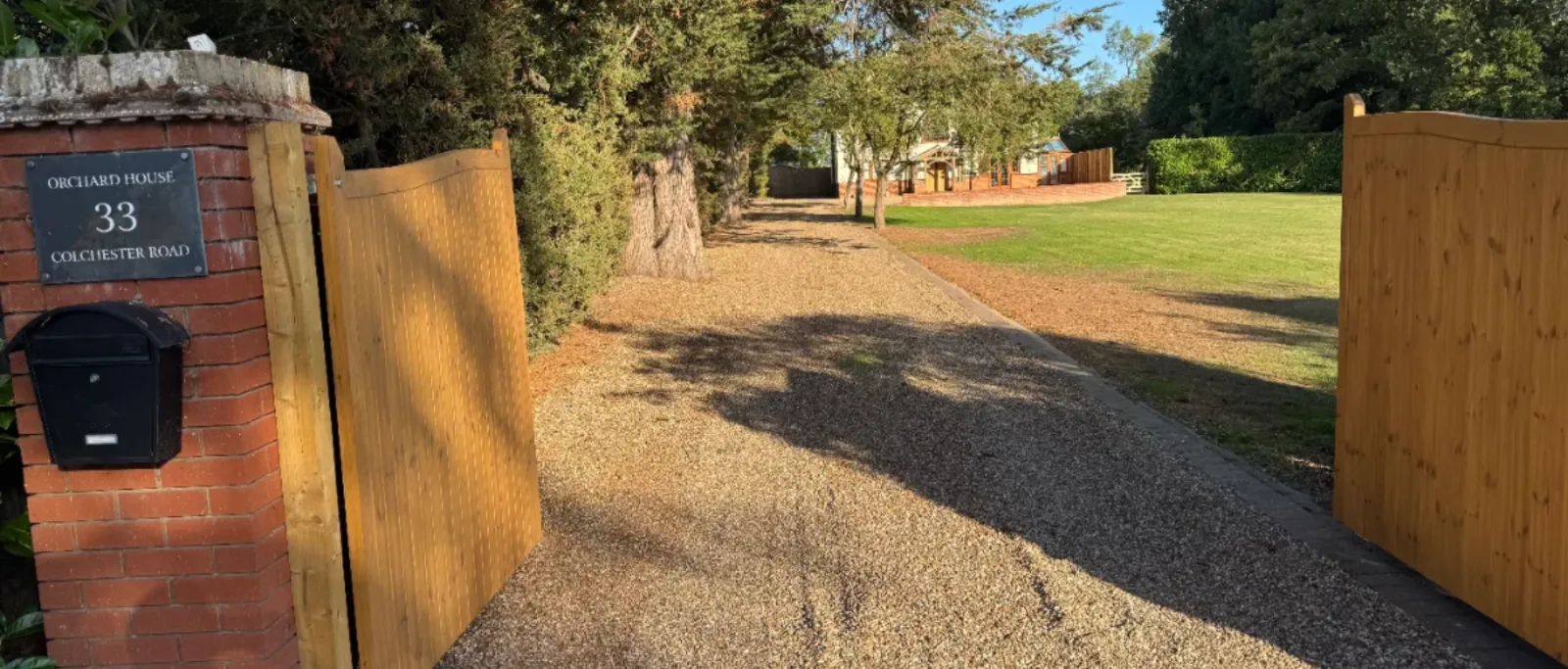
If you would rather not wait for hands-on care, we are at Great Totham, Essex, and look after patients from Maldon, Tiptree and the surrounding villages. Your first consultation and examination costs £105, one-off. It covers your history, a hands-on examination and neurological testing, and you leave knowing what is going on and what we recommend.
We treat low back pain, sciatica and leg pain, neck and shoulder pain and headaches and migraines, among other complaints. You can book your first consultation without a GP referral. If you are insured, ask your provider about cover before you come.
FAQ
Can you see a chiropractor on the NHS?
Not usually. The Royal College of Chiropractors says chiropractic is not normally available on the NHS, though some GP practices offer it. Ask your own practice, and use NHS physiotherapy or community MSK services for free care in the meantime.
Do I need a GP referral to see a chiropractor?
No. You can book a private chiropractor directly. If you hold health insurance, contact your insurer first, as Bupa asks members to do for muscle, bone and joint problems, so that you know what is covered.
Does Bupa cover chiropractic?
Some Bupa products do, with limits. Its employee cash plan page mentions therapy cover up to £500 per benefit year, depending on the membership level. Your table of cover and membership guide give the exact terms for your policy.
What should I check before seeing a chiropractor?
Check that they are on the GCC register, agree the fees before treatment, and tell them about any medicines, especially blood thinners, and any medical conditions. A good chiropractor will explain the proposed care, benefits and risks, and ask for your consent.
Can I self-refer for NHS back pain help?
In England, most adults registered with a GP can self-refer to community MSK services for back, neck and joint pain or sciatica. Availability varies, and some areas ask you to contact the GP surgery. These services do not handle emergencies.
Sources
- Physiotherapy - NHS
- Sciatica - NHS
- Get NHS help for back or joint problems from community MSK services
- Herbal medicines and complementary therapies - NHS
- Patients & Public FAQs - The Royal College of Chiropractors
- Frequently Asked Questions - General Chiropractic Council
- Chiropractic: What does a chiropractor do for back pain? - Bupa
- Health cash plans for employees - Bupa
- Bupa Select Products At A Glance for new small business
- Cash Plan Claim Form - Bupa
- Medical referrals - Bupa UK
- Osteopathy and Chiropractic Network - Bupa
- Outpatient Option - AXA Health
- Individual Provider recognition - AXA Health
- Reiki for physical pain in the UK